Recent engagements
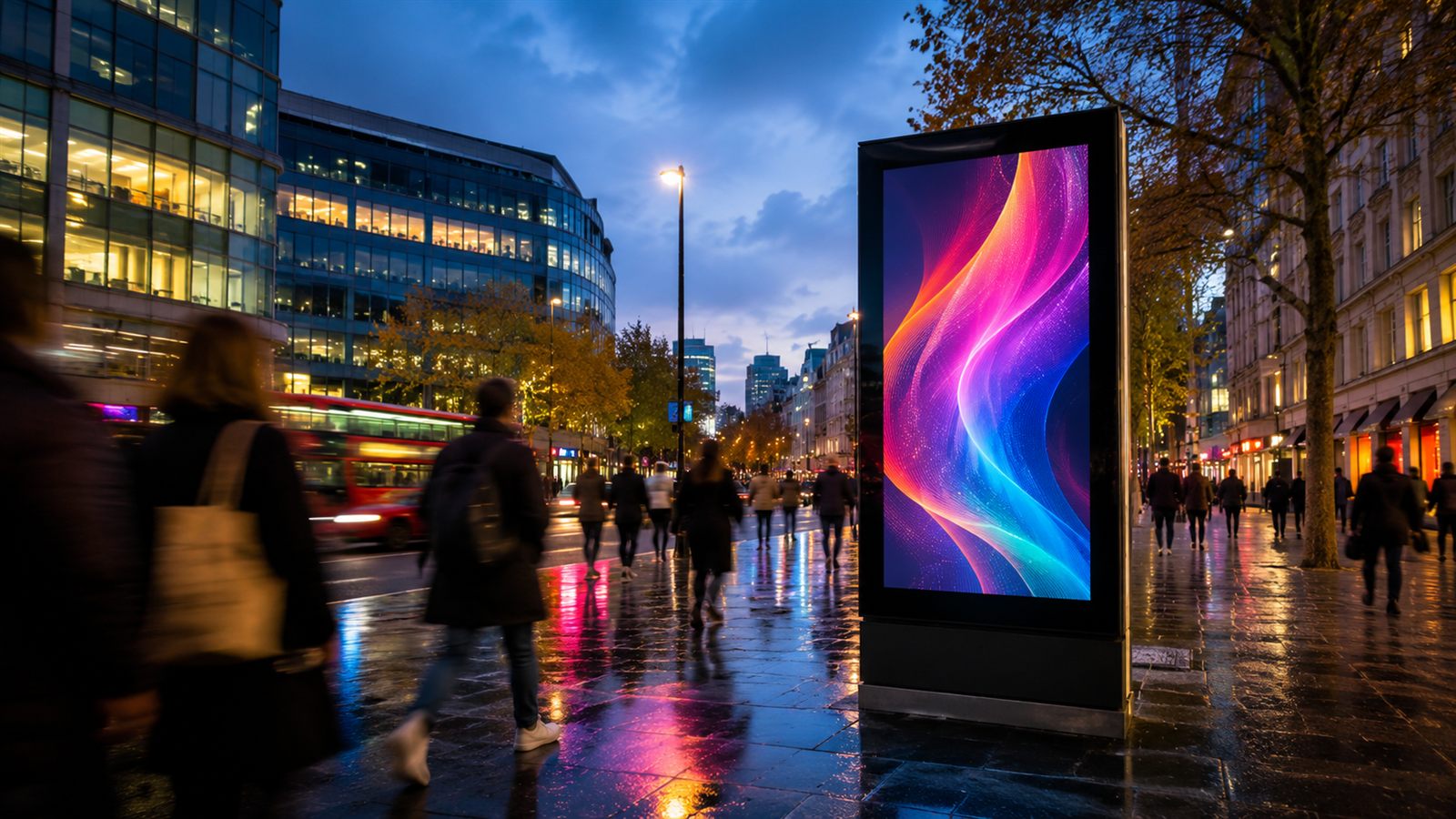
DOOH · AI monitoring & self-healing · 2017–2025
Inventing a self-healing monitoring platform for screen estates across Europe
The problemThousands of screens spread across seven countries, and every fault the same expensive story: monitoring that could say a screen was down but not why, an engineer in a van to find out, and an advertiser looking at a dark display in the meantime. At that scale, the cost of not knowing is enormous.
What Dave didAs chief operating officer of a European digital managed-services provider, DCCO's founder invented a cloud-native platform that acquired live data from every device in the estate, screens, players, networks, used AI to diagnose what the data actually meant, and then acted on it: detecting faults, identifying root causes, and fixing what could be fixed remotely, automatically, before anyone rolled a van.
The outcomeEstates across seven markets ran with fewer site visits, faster recovery, and operational cost that fell instead of scaling with screen count, and the thinking behind the platform now drives DCCO's AI estate-management and observability work.
Invented in-house
Self-healing estates
7 markets
Rapid software development · On site · 2026
A protocol reverse-engineered and a control utility shipped mid-installation
The problemDuring an AV head-end rebuild at a landmark London site, a late requirement surfaced: the client needed remote, networked control of the broadcast receiver feeding a large outdoor LED screen. The receiver had no usable control interface, and the only public documentation of its protocol turned out to be wrong.
What DCCO didReverse-engineered the receiver's network control protocol against the live equipment, handshake, command set, the lot, then used DCCO's AI-accelerated development systems to design, build, test, and package a Windows control utility on the spot: configurable channels, simple and advanced modes, delivered as a ready-to-run application with a full technical reference.
The outcomeA last-minute requirement answered within the installation window rather than becoming a change order and a return visit. The operator's team controls the equipment over the network today, working from documentation they own.
Late-breaking requirement
Protocol reverse-engineered
AI-accelerated build
AI automation · AV design · 2025–26
Automating the documentation engine behind a multi-floor AV fit-out
The problemA major office refurbishment at a global financial institution's London headquarters, four floors, more than forty meeting spaces, a formal construction contract chain, demanded a full AV documentation set: hardware schedules, bills of materials, cable schedules, asset registers, room schematics, O&M manuals. Produced by hand, that volume of interdependent documents is slow, expensive, and where errors breed.
What DCCO didBuilt the automation behind the paperwork. Consolidated hardware schedules became a single source of truth from which drawing documents and system schematics were generated programmatically; contract documents in the JCT chain were reviewed with AI assistance; and DCCO's AI systems kept every derived document consistent as the design evolved with the delivery partner.
The outcomeA complete, buildable documentation set to construction-industry drawing standards, where a design change ripples through schedules, schematics, and registers automatically instead of being re-drafted by hand.
Single source of truth
Automated schematics
AI contract review
Really Useful Theatres Group (now LW Theatres) · Digital signage · 2014–2018
The London Palladium: a signage design still in service twelve years on
The problemReally Useful Theatres Group (now LW Theatres) needed to modernise digital signage across its historic West End venues, starting with a full modernisation of the London Palladium, a listed landmark where space behind screens barely exists and anything installed has to sit gracefully inside a century of architecture.
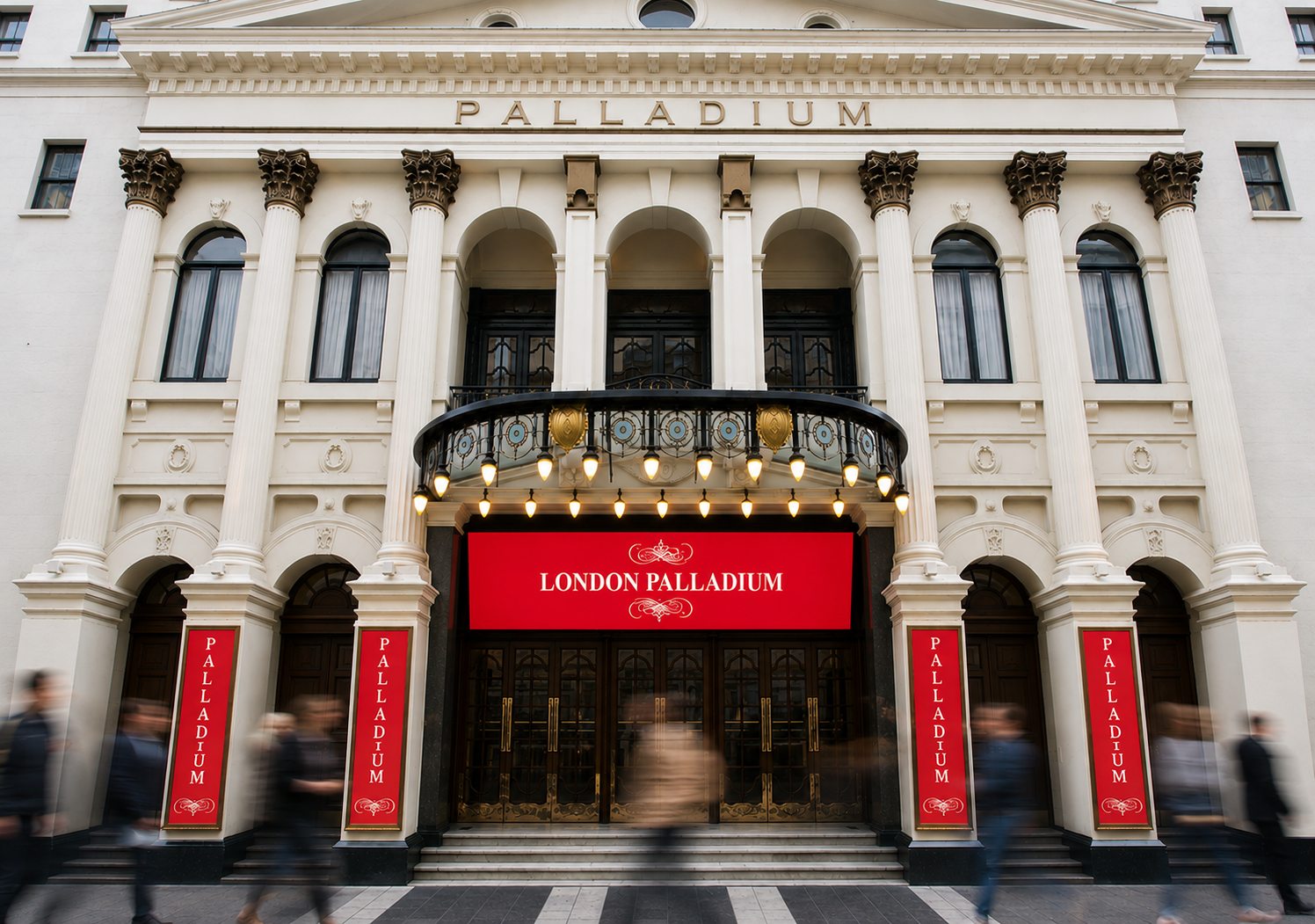 What DCCO didDesigned the Palladium's indoor and outdoor digital screens around a centralised architecture: HDBaseT distribution throughout, with no media players behind the screens, everything managed from a server room, cutting the depth needed on stage-door walls and foyers and making the estate serviceable without touching the fabric of the building. DCCO then remained the group's signage consultant for four years, designing across its other West End theatres: LED-mesh exterior concepts, in-window hybrid displays, a three-screen 4K video wall, and main-sign LED conversions.
The outcomeTwelve years on, the design is still in service: the internal LCD screens and the rear LED still run on the original 2014 architecture, and even the front LED displays, only now being replaced (2026), gave a full twelve years of service. Specification-led advice, measured in decades rather than product cycles.
The London Palladium
12+ years in service
Centralised HDBaseT design
AI · Consultancy · 2026
AI adoption strategy for a 30-year engineering services business
The problemAn established AV integration company wanted to know where AI would genuinely help its operation, and where it would just add complexity.
What DCCO didAnalysed twenty-two business areas, then delivered a phased nine-month adoption strategy with a board presentation, grounded in what the team actually does day to day, not a generic playbook.
The outcomeA projected 40–60 hours per week of recoverable effort identified, with a realistic phase-one scope the business could start on immediately.
22 business areas
Phased roadmap